Saturday, July 8, 2017

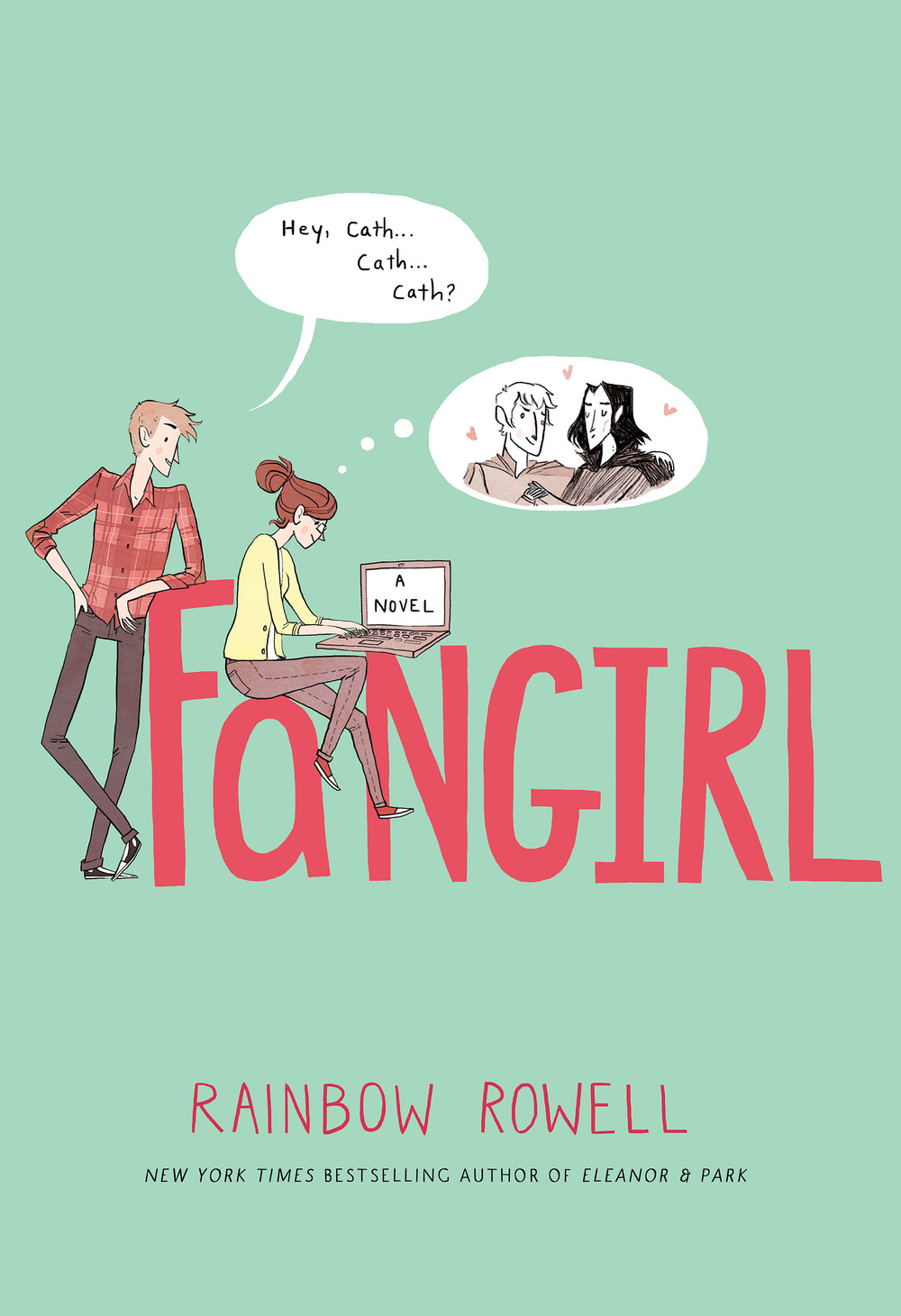
Fangirl


Summary:  Fangirl tells the story of Cather Avery and her twin sister, Wren during their freshman year of college. Wren has decided she doesn't want to live with her sister and Cath is crushed. Cath has always been with her sister and isn't sure she wants to do the college thing if she can't be with her.  Cath is the main character and she writes fan-fiction for a series called Simon Snow (similar to Harry Potter). This is woven into her identity. Cath and Wren are both very independent primarily because their mother left them at a very young age. Their father has emotional break downs from time to time and doesn't like to take medication.  Cath meets her roommate, Reagan, who doesn't even bother to get to know her until October.  Reagan's boyfriend, Levi, is always in their room.  Cath and Wren get into a fight when her father has a break down and Cath chooses to go home and Wren doesn't.  Cath's writing is extraordinary.  Her writing partner, Nick and her professor think so.  Cath is trying to finish her fan-fiction book Carry On before the last book in the Simon Snow series is released.  Levi, her new boyfriend is a distraction but she realizes that being in the here and now might be better than living vicariously through Simon, Baz and Penelope.

Rowell, R. (2015). Fangirl. New York: St. Martins Griffin.


Commentary:  This book is a New Adult book intended for audiences aged 18 - 30.  I truly enjoyed this book, maybe because I have a college student and it was something she and I could talk about.  The comparison Rainbow makes in the book about months... 
“Months are different in college, especially freshman year. Too much happens. Every freshman month equals six regular months—they're like dog months.”  I love this quote and my college daughter completely related.  I could relate to all of the characters.  I am much like Cath myself.  I would rather stay in that go out.  My husband on the other hand is the Wren in our relationship.  He thrives on people and human interaction.  I liked the connection to Simon Snow, where you find yourself attached to things from days past and struggling to let go. Growing up is hard to do.


Connections:  I would consider this book a Realistic Contemporary Fiction novel about the life and experiences of Cath, during her first year of college. The book does a good job developing a love story, no matter the kind of love, between Cath and Wren, Cath and Levi, Simon and Baz, their father and the sisters.  Rainbow helps you to fall in love with all of the characters, their stories and their history. The book eventually focuses on the consequences of Cath's choices and she grows into her own person, one separate from her "twin sister." 


The link to the author's page for Rainbow Rowell. 


Book Trailer


Interview with Rainbow Rowell from Kobo in Conversation about Fangirl.


Interview on AVID from 2011 on her book Attachments.


Interview with Rainbow Rowell at BookCon 2015 about her follow up book Carry On.


Interview with Rainbow Rowell from the Rumpus.


Friday, July 7, 2017

I Hunt Killers

Summary:  I Hunt Killers is the first book in the I Hunt Killers Trilogy. This book is a thriller about a 17 year old boy, Jasper, who is trying to solve the mystery of a killing spree in his small town while trying to deny that he may be a serial killer himself, just like his father, who happens to be one of the world's worst serial killers. Throughout the book, Jazz flashes back to memories of his father and the many atrocities that he experienced growing up, from his dad filleting his dog in front of him to his father's strange way of "showing him the ropes" of his murderous ways. The murders begin again although his father has been in prison for a long time. Jazz knows just what's going to happen, because they are duplicates of his father's disturbing crimes. Jazz is determined to end the killing but he's getting too close, so close that a beloved teacher is murdered and his best friend is almost killed.  He's working with the police to end the madness but we never get a close to the end of this story...meaning there's more story to tell in the following two books, Game and Blood of my Blood.

Lyga, B. (2012). I hunt killers. New York: Little, Brown.

Commentary:  The strengths of this book are that it is one that keeps your interest at every step of the way. Just when you think you have figured out who the real killer is, it is not who you think it is.  The back story really develops your sense of Jasper, his grandmother who has a mental illness and his relationship with his father and mother.  Jazz struggles with the reality that he might be pure evil and a serial killer just like his father.


Connections:  This book would be a Realistic Contemporary Fiction novel being that it is based in a small town very similar to any other small town we might see. The characters are using cell phones and computers to help them solve the crimes.  It is set in today's day and age.  It was intriguing although very disturbing for my psyche. 


Link to the author's page Barry Lyga.


Book Trailer


Interview with Barry Lyga.

20 Questions with Barry Lyga from his other book, Goth Girl Rising.

Shut Up and Write interview with Barry Lyga

I Hunt Killers Discussion Questions

Thursday, July 6, 2017

A Study in Charlotte

Summary:  A Study in Charlotte was a 2017 Best Fiction for Young Adults book.  It's about Jamie Watson, who has left England to attend boarding school in Connecticut.  His family has a long history with Sherlock Holmes as a relative of "THE" Watson. He knows of Charlotte Holmes, the great, great, great granddaughter of Sherlock Holmes and they end up in the same boarding school. Jamie is a rugby player by day but his passion is to be an author.  He gets tangled up with Charlotte when Lee bullies both Jamie and Charlotte.  When Lee turns up dead and another student they are associated with is almost killed, pointing fingers at both Charlotte and Jamie.  They dig into their familial crime solving genes and try to find the killer before the killer succeeds in pinning the crime on them.  

Cavallaro, B. (2016). A Study in CharlotteNew York, NY: Katherine Tegen Books, an imprint of HarperCollins.

Commentary:  The strengths of this mystery book are that it is a tale that keeps your interest at every twist and turn.  Just when you think you have figured out who the real killer is, the rug is pulled out from under your theory.  


Connections:  This book would be a Fiction, low fantasy novel in the mystery category being that it is based in a small town very similar to another city that we would see in Minnesota. Although it mainly focused on the characters and their development and struggle, the events that take place as werewolves would not really happen making it a fictional story. This story tugs at my heart, wanting Sam to survive as a human for Grace but I also don't want him to lose his family connection with Beck and Ulrich and his wolf family. I enjoyed they way this book went from one narrator, Grace, and then switched to Sam's point of view in the next chapter.  It was also interesting how it told the temperature for each chapter so a lot of the time left you thinking, "ok this is the chapter where he will change, its too cold." But then he wouldn't. It was intriguing. 


Link to the author's page Brittany Cavallaro.


Book Trailer


Interview with Brittany Cavallaro


Interview with Brittany Cavallaro from Epic Reads.


Link to Brittany Cavallaro's Instagram.

Tuesday, July 4, 2017

LSSL 5385 03 Textbook Reflection - Chapters 6-10

LSSL 5385 03 Textbook Reflection - Chapters 6-10


Genres and formats?
  • There are two genres:  Fiction and Non-Fiction.
  • Everything else is a sub-genre.  
  • I created my own little infographic to better understand where everything falls. 
  • Important information about Modern Fantasy:  Hard Science Fiction is when science is most in the forefront of the book, not the characters and their relationships.  When the book has a science element but the characters and their development is at the forefront the book is considered a Soft Science Fiction book.  The same thing goes for High Fantasy.  If they have created new worlds, new languages not ones that we would recognize then it is considering High Fantasy.  If it focuses more on the characters and their development then it is Low Fantasy.
  • Subjects and Categories are just that, subjects and categories or topics. They are not genres.  They are things like: mystery, chick lit, dystopia, horror, sports fiction, war, classics, humor, paranormal, action-adventure, etc.
  • Formats are the types of books like poetry, drama, novel, chapter books, short stories, picture books and graphic novels.  
  • These are all things to consider when thinking about genrifying a library. Personally, I am not a big fan of genrifying.  I like my students to know they can go into any section in the library to find what they are looking for.  Some students might be afraid to look in sections that are traditionally for boys or traditionally for girls.  To me, if it is organized by the Dewey Decimal System then they can feel comfortable going into any section.
Reflection
This was a big clarification for me.  I was under the impression that most of these sub-genres where genres.  I am also glad to know that Dr. Perry is also not a big fan of genrifying libraries. 

What is YA Literature?
  • Young Adult Literature is published for readers usually aged 13 to 18 with characters about the same age.
  • They are from the adolescent's point of view, usually surrounding a conflict or problem of some sort in which a significance change their their life will occur.
  • The main character is usually highly independent, presented with issues that mirror events occurring in modern times.
  • The story usually spans a fairly short period of time in a limited setting with only a few characters who have been fully developed.
  • The main character experiences the brunt of the consequences of their actions plus the story evolves around how an adolescent develops. 

How do adolescents develop?
In order to successfully match students with books, we must know how those students develop.  There are 5 main areas to consider:  Intellectual, Moral, Physical, Developmental and as a Reader.
  • Intellectual - We need to consider how the adolescent develops in thinking.  According to Piaget, children go through developmental stages.  The stage of youth from ages 7 til about 11 to 14 are concrete thinkers and then they progress to more formal or abstract thought.  This can effect how pre-teens and teens process literature and what they read.  If they are still in a concrete level then we need to provide proper scaffolding to help them get to the more abstract thought that they may not yet have developed.
  • Moral  - According to Kohlberg there are three stages of moral development:
    • Pre-conventional: reward/punishment.  If I do this, I will be rewarded.  If I do that, I will be punished.  This is the lowest level.
    • Conventional - These are the rule followers.  Those that follow rules based upon society or perhaps their religion
    • Then there is Post-Conventional - These are the people who recognize the laws but life supersedes the law, for instance Rosa Parks disobeyed the law when she wouldn't give up her seat but it was for a greater cause.
    • We need to realize and understand where our students are in this hierarchy.
  • Physical - students at this age are going through puberty so they are going through a great deal of change physically and mentally.  Their body is developing at different rates and they begin to wonder "Am I normal?" Educators need to understand that the student's physical reality can get in the way of everything else.
  • Development - A lot is going on with students from the age of 13 to 18.  They are moving from learning to get along with their peers and having easy relationships with the opposite sex to beginning to wonder about their place in the world.  
    • For them pay = independence so they are wanting to work for pay
    • They are pulling away from their parents to find their own way
    • In pulling away, they are beginning to question their morals and values and ask themselves, "Do I agree with my parents on this issue or that?"
    • They are adapting to their changing bodies - big hands, big feets, growth spurts, acne, etc.
    • They are defining appropriate sex roles.  They can be friends with girls that are NOT their girl friend, etc.
    • Maslow's Needs Hierarchy also needs to be considered.  Their needs must be met in order for them to learn beginning with physiological, safety, love/belonging, esteem to be able to reach self-actualization.  If these needs aren't met then the reader is unable to be developed.
  • Lastly, the Reader.  Students develop as readers over time.  They will develop empathy, unconscious delight, autobiographically, etc.  They will develop all of the characteristics of why we share literature with children in the first place.  It all comes full circle.
Reflection
It is important in everything we do to consider our audience.  Although, much of this is common sense I am glad to see the science and philosophy behind make of the data about how adolescents develop and mature.  I have two teenagers in my house at this moment in time and it's a good reminder as a parent too.

Literary Elements - these are the quick, short definitions of each terms as we see these over and over again
  • Antagonist - Character in the story - usually a bad one
  • Character - person in the story
  • Conflict - problem
  • Mood/tone - the emotion the author is trying to convey
  • Plot - The action that makes up the story
  • Protagonist - Main character - usually the good one
  • Setting - When and where the story takes place
  • Theme - The message that the author is trying to convey, evidence is found in the story
Reflection
Literary elements are generally something that we are familiar with but again a good reminder.  I especially enjoyed the video on Theme.  I think that this abstract thinking is hard for elementary but it would be something that I could help my older students begin to understand especially with the help of your examples of using picture books like Where the Wild Things Are

Literary Devices - these are the quick, short definitions of each term.  Literary devices are those story structures that authors use to convey messages in his or her writing.  
  • Allegory - figure of speech but not symbolism
  • Allusion - an indirect reference to something that gives additional meaning to the thing being described
  • Archetype - A typical character.  Examples: The Hero, the Mother figure, the Villain, etc.
  • Deus ex Machina - An divine intervention or incident that brings an abrupt resolution to the story but doesn't necessarily tie up all the loose ends.
  • Hyperbole - figure of speech that is exaggerated, for example, "Not in a million years."
  • Imagery - language used to create a picture in your mind's eye.
  • Metaphor - comparison between two things, for example, "I am dead tired."
  • Motif - concept or idea that repeats itself throughout a story in a noticeable way.
  • Point of View - How the story is told from first person, second or third.
  • Simile - a comparison between two things using "like" or "as"
  • Symbolism - signifies underlying ideas or meaning, for example white can symbolize pure or light.
Reflection
I loved the links to all these different literary devices.  Again another good reminder and useful to help when teaching my students. 

Awards - There are numerous awards given to YA Literature books.  They are given for both fiction and non-fiction, lots of different formats, like graphic novels, paperbacks, audiobooks, etc. and lots of sub-genres, subjects and topics.

  • Printz - This award is named for "Michael L. Printz Award. It is an award for a book that exemplifies literary excellence in young adult literature."
  • YALSA Excellence in Nonfiction - "YALSA's Award for Excellence in Nonfiction honors the best nonfiction book published for young adults (ages 12-18) during a Nov. 1 – Oct. 31 publishing year."  
  • Great Graphic Novels for Teens - "Great Graphic Novels for Teens is a list of recommended graphic novels and illustrated nonfiction for those ages 12-18, prepared yearly by YALSA."
  • Best Fiction for Young Adults - "YALSA’s Best Fiction for Young Adults Committee presents fiction titles published for young adults in the past 16 months that are recommended reading for ages 12 to 18. The purpose of the annual list it to provide librarians and library workers with a resource to use for collection development and reader’s advisory purposes."
  • Margaret A. Edwards Award - "The Margaret A. Edwards Award, established in 1988, honors an author, as well as a specific body of his or her work, for significant and lasting contribution to young adult literature." 
  • ALEX Award - "The Alex Awards are given to ten books written for adults that have special appeal to young adults, ages 12 through 18. The winning titles are selected from the previous year's publishing." 
  • Odyssey Award - "This annual award will be given to the producer of the best audiobook produced for children and/or young adults, available in English in the United States. 
  • Morris Award - "The William C. Morris YA Debut Award, first awarded in 2009, honors a debut book published by a first-time author writing for teens and celebrating impressive new voices in young adult literature." 
  • Outstanding Books for the College Bound - "The books on this list offer opportunities to discover new ideas, and provide an introduction to the fascinating variety of subjects within an academic discipline. Readers will gain an understanding of our diverse world and build a foundation to deepen their response to that world. This list is developed every five years."
  • Popular Paperbacks - "Each year, the Popular Paperbacks committee creates lists of books to encourage young adults to read for pleasure. The lists of popular or topical titles are widely available in paperback and represent a broad variety of accessible themes and genres."
  • Quick Picks for Reluctant Readers - "The Quick Picks for Reluctant Young Adult Readers list identifies titles aimed at encouraging reading among teens who dislike to read for whatever reason. The list selects both fiction and nonfiction."  
  • Readers’ Choice - "YALSA’s Readers’ Choice list seeks to engage a wide audience of librarians, educators, teens and young adult literature enthusiasts in choosing the most popular teen titles in a given year, as organized by broad genres.  The list will also provide librarians with a timely means of identifying popular teen titles on an ongoing basis." 
  • Teens Top Ten - "The Teens' Top Ten is a "teen choice" list, where teens nominate and choose their favorite books of the previous year!'
  • Amazing Audiobooks - "Each year, YALSA's Amazing Audiobooks committee selects and annotates an annual list of notable audio recordings significant to young adults from those released in the past two years."
  • YA Choices - "Since 1986, the Young Adults' Choices project has developed an annual list of new books that will encourage adolescents to read. The books are selected by the readers themselves, so they are bound to be popular with middle and secondary school students." 
  • Lone Star Reading List - "The Texas Lone Star list is a recommended reading list developed by public and school librarians from the Young Adult Round Table. The purpose of the list is to encourage students in grades 6, 7, or 8 to explore a variety of current books. The Lone Star list is intended for recreational reading, not to support a specific curriculum." 
  • TAYSHAS Reading List - "The Tayshas Reading List was developed to motivate young adults, grades 9-12, to become lifelong readers and to participate in the community of young adult readers throughout Texas." 
  • Maverick Reading List - "The Maverick Graphic Novels Reading List was created and approved in 2009 to encourage young adult readers, grades 6-12, to explore a variety of current books in graphic novel format. The name, “Maverick” was chosen for this reading list because Texas was the first state to create a graphic novel reading list- we were the Mavericks in the field."
  • Edgar Award for Mystery - "The Edgar Allan Poe Awards (popularly called the Edgars), named after Edgar Allan Poe, are presented every year by the Mystery Writers of America, based in New York City. They honor the best in mystery fiction, non-fiction, television, film, and theater published or produced in the previous year."
  • Orbis Pictus - "The NCTE Orbis Pictus Award was established in 1989 for promoting and recognizing excellence in the writing of nonfiction for children."
  • Batchelder Award - "The Batchelder Award is given to the most outstanding children’s book originally published in a language other than English in a country other than the United States, and subsequently translated into English for publication in the United States."
  • Scott O’Dell Award for Historical Fiction - "Scott O'Dell established this award to encourage other writers--particularly new authors--to focus on historical fiction. He hoped in this way to increase the interest of young readers in the historical background that has helped to shape their country and their world."
  • Pura Belpre Award - The Pura Belpré Award, established in 1996, is presented annually to a Latino/Latina writer and illustrator whose work best portrays, affirms, and celebrates the Latino cultural experience in an outstanding work of literature for children and youth. 
  • Schneider Family Award - The Schneider Family Book Awards honor an author or illustrator for a book that embodies an artistic expression of the disability experience for child and adolescent audiences.
  • Sibert Award - The Robert F. Sibert Informational Book Medal is awarded annually to the author(s) and illustrator(s) of the most distinguished informational book published in the United States in English during the preceding year. 
  • Stonewall Award - The first and most enduring award for GLBT books is the Stonewall Book Awards, sponsored by the American Library Association's Gay, Lesbian, Bisexual, and Transgender Round Table.


Award Resources:
Each award is a link to the information contained therein.

Reflection
I had no idea that there were this many different awards. It did not appear that any of these awards were duplicates of another, they were all for either a different purpose, genre, format, etc.  I had heard of a few of these but now I have a really good grasp of the scope of awards that can be awarded in the YA field.
Wednesday, June 28, 2017

Shiver


Summary:  Shiver is not your typical werewolf story. It is a teenage love story with a twist. The werewolves don't change into savage beasts during a full moon, it happens when the temperatures become too cold for them to stay human. Grace, the young protagonist, was bitten by a wolf when she was young but never changed. We never really figure out why she never changed. It could be that her father left her in a hot car or that she got really sick with the flu right after with a super high fever. Sam, Grace's wolf, her protector and savior also tells part of the story from his point of view. Sam's parents were cruel to him, trying to kill him in a bath tub when Beck supposedly swoops in to save him.  

During the story one of her classmates, Jack Culpepper is "killed" by the wolves.  He wasn't a very nice human but he is even more mean as a wolf. His sister, Isabel, discovers the truth and wants to cure him, Sam and Grace's friend, Olivia. Jack bit Olivia changing her too. She thinks it was Grace's high fever that was the cure, so she comes up with the idea of giving each of them bacterial meningitis, a deadly disease. Jack takes his dose, but dies 3 days later.  Olivia decides she wants to become a wolf and refuses her dose and Sam takes his dose but becomes a wolf right in the middle of it and runs off. We are left with Sam and Grace embracing as humans at the end of the story, obviously with sequels already written there is more to this story.

Stiefvater, M. (2009). Shiver. New York: Scholastic Press.

Commentary:  The strengths of this book are that even though it is a love story that not many boys can usually relate to, it has both boy and girl protagonists and tells the story from both of their point of view so boys can relate to it as well.  After watching many author interviews, I found out that she came from a family with 5 children who were all musically inclined. She changed her name when she was 16 years old.  She was originally Heidi Hummel.  She wore black and goth before it was considered cool. She was homeschooled from 6th grade on. Despite that she was not around a hoard of teenagers growing up she really knows the teenage heart and soul and how to reach into their mind and reach them through her stories.  Grace has parents that don't pay very close attention to her so Sam is basically able to live in her room for weeks without her parents even noticing.  This is probably something that most teens would probably believe happens because they believe no one ever notices them but the truth is they could probably never get away with that.


Connections:  This book would be a Fiction, low fantasy novel being that it is based in a small town very similar to another city that we would see in Minnesota. Although it mainly focused on the characters and their development and struggle, the events that take place as werewolves would not really happen making it a fictional story. This story tugs at my heart, wanting Sam to survive as a human for Grace but I also don't want him to lose his family connection with Beck and Ulrich and his wolf family. I enjoyed they way this book went from one narrator, Grace, and then switched to Sam's point of view in the next chapter.  It was also interesting how it told the temperature for each chapter so a lot of the time left you thinking, "ok this is the chapter where he will change, its too cold." But then he wouldn't. It was intriguing. 


Link to the author's page Maggie Stiefvater


Book Trailer


YASLA Interview with Maggie Stiefvater


Interview with Maggie Stiefvater (this interview references her trilogy Raven Cycle) but helps us to get to know this author.


National Writers Series:  An Evening with Maggie Stiefvater


Shiver Study Guide
I found a lot of fans asking if Shiver would be made into a movie and here is what I found on Maggie Stiefvater's Tumblr Page.

Tuesday, June 27, 2017

The Notorious Benedict Arnold


Summary:  The Notorious Benedict Arnold tells the story of one of America's bravest revolutionary leaders and most notorious traitor. Born in Norwich, CT young Benedict Arnold came from a once prominent family that fell into disarray as his father fell on hard times financially. While away at boarding school (Yale) he lost his sister to Yellow Fever driving his father to alcoholism that worsened upon the death of his mother. Since they could no longer afford schooling, his mother set him up with an apprenticeship as an apothecary and tradesman. He joined the military at this point but when is mother got sick he deserted to take care of her. After his father's death he forever took care of his only living sibling, Hannah. 

Upon finishing his apprenticeship he became a very successful merchant in New Haven, CT marrying his wife, Margaret, who bared three sons. Like many colonists, the Stamp Act and other British taxation began to degrade his business so he decided to join the military and the Revolutionary War. 

Arnold's military in the service of the United States was distinguished but filled with controversy. He lead the war into Canada and the siege of Quebec and showed to be incredibly brave and bold. While there, his wife died. He technically built and led America's first Navy on Lake Champlain where he successfully held the British Navy at bay and in the second battle of Saratoga he again saved the Revolutionary Army with a fit of brilliance. 

While Washington loved Arnold, his fame grew too much and he got caught up in the constant bickering with Congress. His injuries at Saratoga were so grave that he was assigned to be the military governor of Philadelphia where he had some shady financial dealings and married a Tory who eventually supported him in his final betrayal. Disgraced by being passed over and constantly harassed by both the Pennsylvania legislature and the Continental Congress, Arnold was convinced (in part due to his mounting debt) to betray the American forces and General Washington. Due to a few mishaps and lucky situations for the Americans, Arnold's plot was thwarted and luckily discovered. While he was named a British Officer and served England for a number of years, he died unknown and unremarkable in England years after the betrayal.  

Sheinkin, S. (2010). The notorious Benedict Arnold. New York: Macmillan.

Commentary:  
Arnold was a very proud, brave, energetic and brilliant. His past however also created a man that was prideful and easily angered. The tragedies early in his life compounded by the challenges (embarrassment of his father) had a profound impact on his life. The things that lead him to become a great fighting general and the man Washington loved also created conflicts making him a political liability. The constant slights and financial pressures due to this probably lead him to his betrayal. He was a staunch advocate of the American cause but the influence of his second wife along with constantly being slighted had a large impact on his psyche. If Arnold had stayed loyal he might have been known as one of the bravest US commanders behind Washington. Washington actually offered him leadership of his left flank but he had already made his deal with the British and chose West Point to divide the US army and hopefully cause their downfall. Ultimately, Arnold's conflict between honor and pride became his downfall.

The only memorial left to him is the leg he gave in the battle of Saratoga. At some far flung area of the Saratoga battlefield is a statue of a leg, the one Arnold gave in the service of the American cause there. At one point either Washington or one of his men said that "His leg was a hero and patriot, and the rest of him was a traitor".


Connections:  I would consider this book a Non-Fiction Informational Biography about the real life of Benedict Arnold and the situations that created his eventual betrayal. Although it mainly focused on Arnold and his life it also provided insights into the key players in his life and the plot to deliver Washington to the British. The book does a good job describing the events, pressures and situations that lead Arnold to his eventual betrayal. The book takes Benedict Arnold through his young life into adulthood. There are many themes of confrontation and significant life changes (deaths, changes in career, etc.) impacting a very independent-minded Arnold. The book also includes few fully developed characters and eventually focuses on the consequences of his actions. 


The link to the author's page for Steven Sheinkin. Sheinkin was originally a textbook author and tried his hand as a documentary filmmaker which didn't work out. He now writes about historical figures and situations. 


Book Trailer


Interview with Steve Sheinkin after he won the 2012 YALSA Excellence in Nonfiction Award for this book.


Lecture with Steve Sheinkin